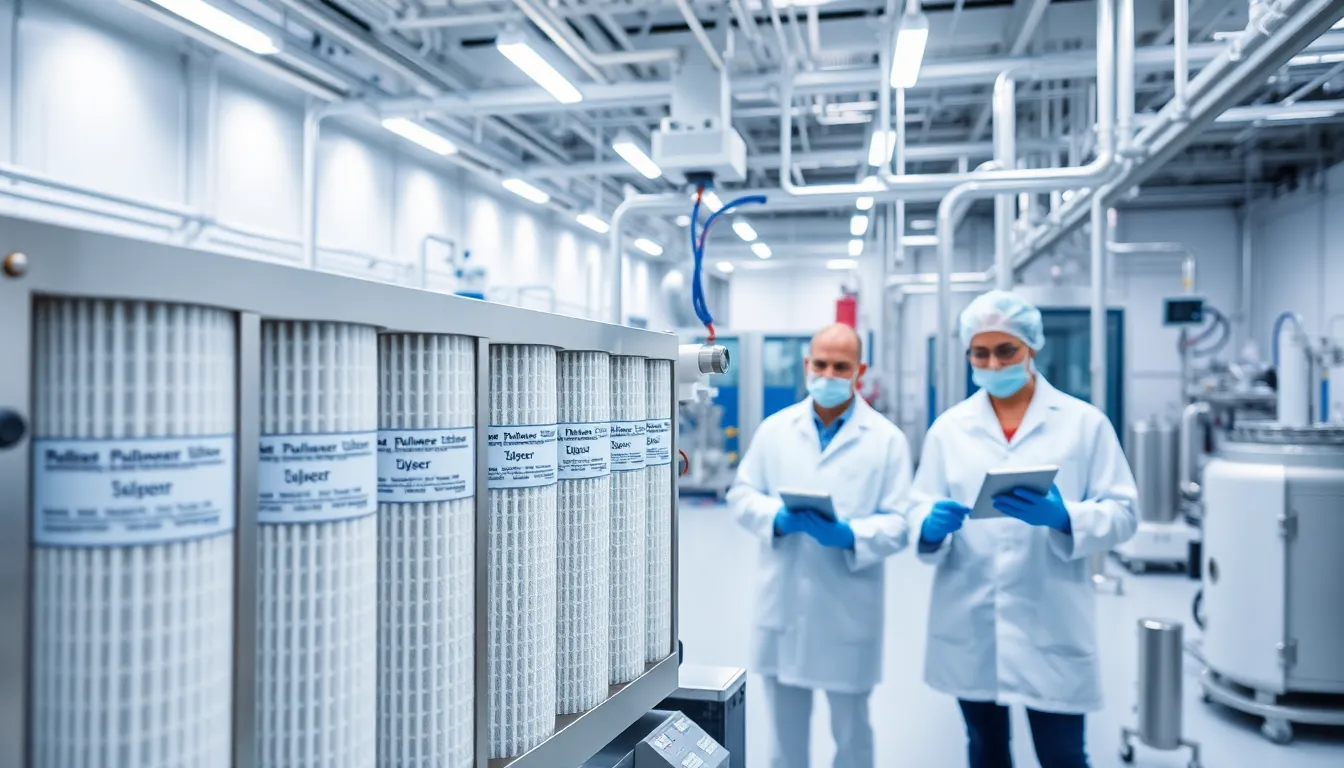
Industrial filtration requirements have grown increasingly stringent, driven by the high standards of pharmaceutical manufacturing, electronics, food processing, and automotive sectors. Located in Shanghai’s Songjiang District, Pullner Industrial Filtration Solutions is known for its advanced 10,000 square meter cleanroom facilities and extensive filtration production lines. This guide addresses the essential aspects of Pullner Filter’s technology, product range, and best practices, answering common questions from professionals seeking process efficiency, particle removal, and regulatory compliance.
What Is a Pullner Filter?
A Pullner Filter is a high-performance filtration solution manufactured by Pullner Filtration Technology, Ltd., a company specializing in industrial liquid, gas, and process filtration systems. Their filters are engineered for critical particle control and clarity, leveraging membrane, pleated, and depth filter technologies. Industrial Filter Manufacturer China – Pullner product lineup includes bag, cartridge, and specialty filter cartridges designed for precise removal of particulates and microorganisms. With a manufacturing base in Songjiang District, the company owns 20+ production lines within their cleanroom facilities, supporting significant capacity and product consistency.
Pullner Filters are widely deployed wherever reliable particulate control and process integrity are required, such as within pharmaceutical, semiconductor, food and beverage, and automotive manufacturing processes. Key performance aspects include narrow micron ratings, high dirt holding capacities, and consistent batch-to-batch quality. The company adheres to global standards for filter validation and compliance.
Key Applications and Industries
Pullner Filters are integral to multiple industries where safe, consistent, and efficient filtration determines product quality. The most common applications include:
- Pharmaceutical Manufacturing: Pullner‘s membrane filters help achieve sterile or ultra-pure water for critical cleaning or ingredient processes. Filters with 0.2 micron ratings are often used for bacterial interception in injectable production.
- Microelectronics and Semiconductor Fabrication: Sub-micron contaminants must be removed from process chemicals and DI (deionized) water to prevent defects on wafers. Electronic Air Filter Systems by Pullner cartridge filters, produced under cleanroom controls, are engineered for high-purity environments.
- Food and Beverage Processing: Ensuring removal of bacteria, yeast, and particulates from products including bottled water, dairy, beer, and soft drinks. Pullner‘s food-grade filter cartridges are manufactured for compliance with food contact safety standards.
- Automotive Manufacturing: Filters are used for hydraulic oils, coolants, and paint line chemicals, ensuring downstream cleanliness and equipment longevity.
Pullner Filter’s broad install base also extends to power generation, bioprocessing, chemical manufacturing, and wastewater treatment, where filtration is essential for regulatory and operational reasons.
How Pullner Filters Work
Design and Construction
Pullner Filters combine robust housings with advanced filter media, produced in ISO-class cleanroom environments. The construction uses stainless steel, polypropylene, or other corrosion-resistant polymers, depending on chemical compatibility and process temperatures. Cartridge and membrane elements are fabricated using pleating methods to maximize surface area in a compact footprint. End caps and seals are thermally bonded or welded to maintain integrity under high pressure and cyclic operation.
Filtration Mechanisms
Pullner products use several mechanisms for contaminant interception:
- Surface Filtration: Membrane and pleated elements remove particles on the surface of the media, ideal for precise micron ratings such as 0.2 or 0.45 microns.
- Depth Filtration: Multi-layer construction traps contaminants throughout the media thickness, improving dirt holding and service life for larger particulate loads.
- Adsorption: Certain Pullner specialty filters use activated carbon or charge-modified layers to capture organics, chlorine, or ionic contaminants.
Every filter is validated by integrity and microbial retention tests to ensure conformance with application requirements.
Types of Pullner Filters
Bag Filters
Bag filters supplied by Pullner are typically used in pre-filtration or processes with higher suspended solids. They consist of fabric or felt filter bags housed in robust vessels, handling flow rates from several m³/h up to hundreds, depending on bag size. Disposable and reusable models are both available.
Cartridge Filters
Pullner‘s Advanced Cartridge Filter Manufacturing Capabilities portfolio includes:
- Standard Depth Cartridges: Designed for bulk particulate removal, available in polypropylene, fiberglass, or other materials through Glass Fiber Filter Production Expertise.
- Pleated Membrane Cartridges: Featuring polyethersulfone (PES), PTFE, or nylon membranes, these achieve bacterial interception and reliable micron control. Common in final-stage filtration.
- High Flow Cartridges: Engineered for large-scale processes, handling high flow rates with lower differential pressures.
Custom and Specialty Filters
Pullner offers custom-designed filters for unique chemistries, high-viscosity fluids, or demanding validation requirements. These may incorporate specialty media layers, RFID tracking for process validation, or unique end fittings for legacy equipment.
Benefits of Using Pullner Filters
- Reliable Particle and Microbial Removal: Products with certified micron ratings, including options for 0.1–50 micron, deliver consistent control over particles, bacteria, and other contaminants.
- Consistent Quality Assurance: Manufactured with 20+ production lines within cleanroom conditions, each High Temperature Filter Manufacturing in China filter undergoes rigorous testing, including integrity, flow, and extractables analysis.
- Broad Chemical Compatibility: Filters are built with materials resistant to acids, alkalis, and organic solvents, suiting a wide range of industrial fluids including Pullner High Temperature Water Filter Solutions.
- Process Productivity: High dirt holding and flow capacity reduce filter replacement frequency and operating downtime, supporting efficient process lines.
- Regulatory Compliance: Pullner‘s pharmaceutical and food-contact filters meet international standards for validation and documentation, facilitating GMP, USP, and FDA compliance.
- Technical Support and Customization: China-Based Filter Manufacturer – Quality Industrial Filters provides full support from application assessment to commissioning, with the ability to engineer custom filter geometries and media combinations on request.
Selection Criteria and Sizing Guidelines
Filter selection starts with understanding process goals, clarity, biological safety, or equipment protection. Important criteria include:
- Micron Rating: Choose based on the smallest particle or microorganism to be removed. For sterile applications, 0.2 micron or finer is standard. For general clarity, 1–10 micron ratings may suffice.
- Flow Rate: Sizing must account for required process throughput. High flow filter cartridges are recommended for large batch or continuous operations.
- Filtration Efficiency: Look for validated retention ratings and beta values indicating minimum efficiency for target contaminants.
- Fluid Compatibility: Check resistance of filter media and housing to process chemicals, temperatures, and pressure cycles.
- Regulatory and Process Validation: Confirm documentation and certifications such as FDA, CE, or relevant pharmacopeia standards.
Pullner‘s technical team assists with on-site inspection and pilot testing to validate filter selection, ensuring compliance and optimal performance.
Installation and Maintenance Best Practices
Proper filter installation and routine maintenance are key to achieving safety, consistency, and long equipment life.
- Pre-Installation Inspection: Verify filter model, integrity, and batch certification. Install using cleanroom protocols if required.
- Correct Orientation and Sealing: Ensure filters align properly in the housing to prevent bypass.
- Commissioning Tests: Perform integrity testing and initial system flushing per Pullner‘s guidelines, especially for sanitary or critical processes.
- Regular Replacement and Monitoring: Change filters based on pressure drop or recommended service intervals. Keep records to trace filter performance and identify process issues.
- Hygienic Handling: Sterile environments demand filtered air, sanitized tools, and cleanroom clothing for all maintenance activities.
Pullner‘s Complete Filter Manufacturing Portfolio provides on-site training and service support to ensure users achieve optimal filtration performance.
Frequently Asked Questions About Pullner Filter
What is a Pullner Filter and what industries use it?
A Pullner Filter is a high-performance filtration solution from Pullner Filtration Technology, Ltd. It’s widely used in industries like pharmaceuticals, electronics, food processing, and automotive manufacturing to ensure strict particulate and microbial control.
How does a Pullner Filter work?
Pullner Filters use advanced membrane, pleated, and depth filter technologies to remove particles and microorganisms. They employ surface, depth, and adsorption mechanisms, ensuring highly efficient contaminant removal tailored to specific industrial applications.
What are the main types of Pullner Filters available?
Pullner offers bag filters for pre-filtration, standard and pleated membrane cartridge filters for precise control, high flow cartridges for large-scale processes, and custom or specialty filters for unique processes or validation needs.
What benefits do Pullner Filters provide over traditional filters?
Pullner Filters deliver reliable particle and microbial removal, consistent quality from cleanroom production, broad chemical compatibility, improved process productivity, and adherence to global regulatory standards such as FDA and USP.
How do I select the right Pullner Filter for my process?
Selection depends on required micron rating, flow rate, filtration efficiency, fluid compatibility, and regulatory needs. Pullner offers technical support, on-site inspection, and pilot testing to help optimize filter choice for any industrial setting.
How often should Pullner Filters be replaced in industrial applications?
While replacement intervals depend on process conditions and contaminant load, Pullner recommends changing filters once a significant pressure drop occurs or according to scheduled maintenance intervals. Regular monitoring and maintenance help ensure optimal filtration performance