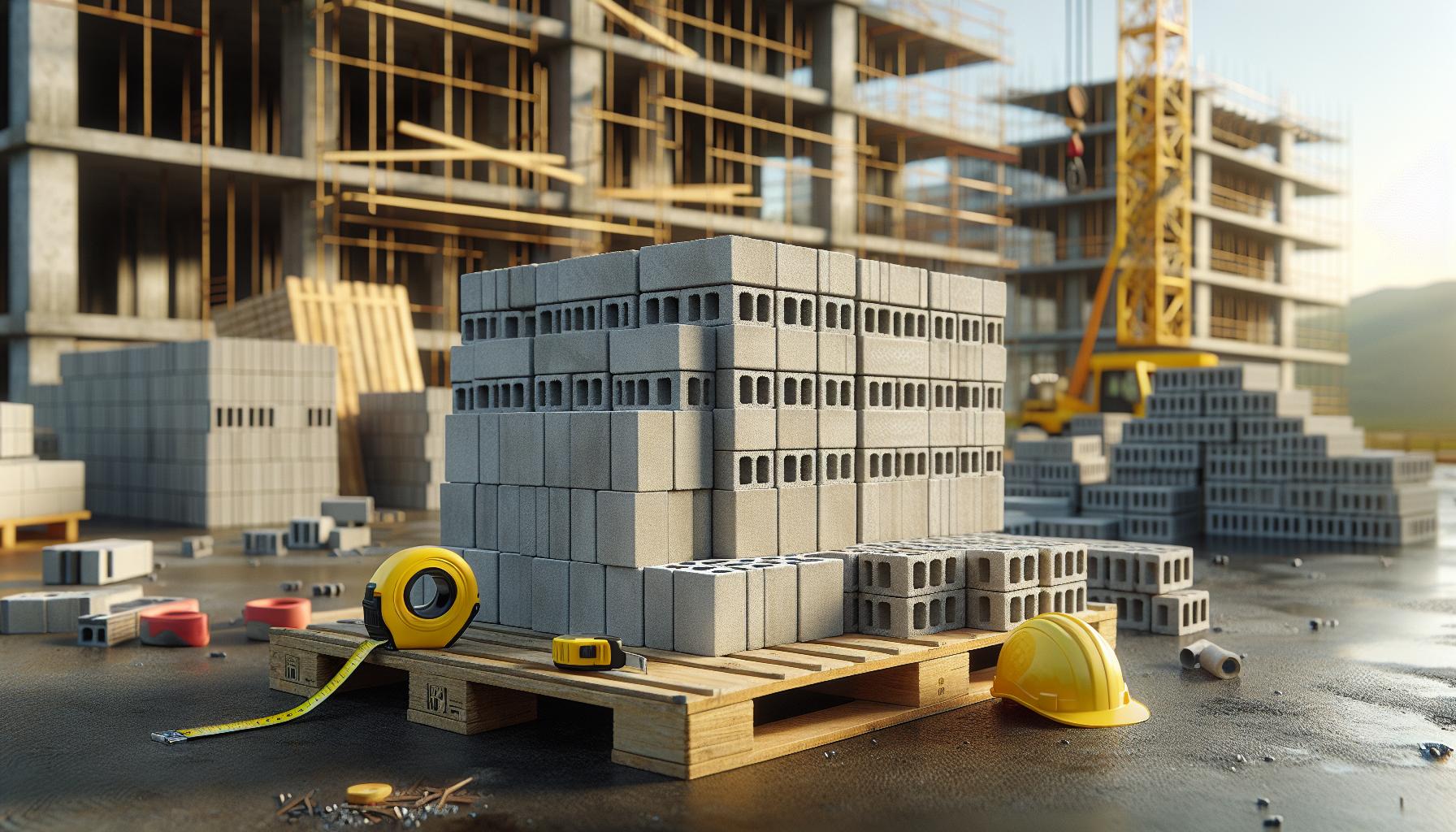
When tackling construction projects, understanding the basics of materials is crucial. One common question is how many cinder blocks come in a pallet, as this can significantly impact budgeting and planning. This article breaks down the typical number of blocks per pallet and explores factors that can influence these quantities, helping builders make informed decisions for their projects.
Overview of Cinder Blocks
Cinder blocks, often referred to as concrete masonry units (CMUs), play a critical role in construction projects. Made primarily from cement, water, and aggregates like sand and gravel, these blocks provide strength and durability. Typical dimensions for standard cinder blocks are 16 inches long, 8 inches high, and 8 inches deep.
Cinder blocks serve multiple purposes, including structural support, insulation, and aesthetic applications in walls, foundations, and landscaping. Builders prefer them for their fire resistance, soundproofing capabilities, and ease of installation.
The manufacturing process involves mixing raw materials, molding them into desired shapes, and curing them to improve strength. Block weights range from 28 to 35 pounds each, depending on the composition and size.
When purchasing, understanding the quantity in a pallet can vary by supplier. A standard pallet typically contains 90 to 100 blocks. Factors such as block size and type can influence these numbers significantly. Knowing this information aids in budgeting and planning, ensuring builders procure enough materials for their projects.
Standard Pallet Size

Standard pallets for cinder blocks typically measure 48 inches by 40 inches. These pallets form a stable base for transporting and storing blocks. The exact number of blocks per pallet can range from 90 to 100, varying based on block dimensions and weight specifications.
Dimensions and Weight
Cinder blocks typically measure 16 inches long, 8 inches high, and 8 inches deep. Weights range from 28 to 35 pounds per block. When stacked on a pallet, it may hold a uniform arrangement to maintain stability during transport. This configuration allows for efficient handling on construction sites.
Common Varieties of Cinder Blocks
Cinder blocks come in several common types, each serving distinct purposes. The standard rectangular block is the most prevalent, but others include:
- Hollow Core Blocks: Often used for insulation and lightweight construction, these blocks contain hollow chambers to improve thermal performance.
- Solid Blocks: Used for structural support, solid blocks are dense and provide increased strength.
- Split-Face Blocks: Designed for aesthetic appeal, split-face blocks have a textured appearance and are often used in visible applications like walls.
- Lintel Blocks: These support doorways and windows, distributing weight across openings.
Understanding the types and dimensions of cinder blocks aids in selecting the right materials for specific construction needs.
Number of Blocks in a Pallet
A standard pallet of cinder blocks typically contains between 90 and 100 blocks. This number can vary based on supplier specifics as well as the size and type of blocks. Understanding this quantity aids in effective budgeting and project planning.
Factors Affecting Block Count
- Block Size: Cinder blocks come in different sizes, which directly influences the number of blocks on a pallet. Standard sizes include 8x8x16 inches and 12x8x16 inches.
- Block Type: Different types of blocks, such as hollow core, solid, or split-face blocks, can affect how many fit on a pallet. Solid blocks tend to be heavier, limiting pallet counts compared to hollow blocks.
- Supplier Variations: Each supplier may package blocks differently, affecting the total count per pallet. It’s important for builders to confirm specific quantities when ordering.
- Pallet Configuration: The arrangement of blocks on the pallet can also impact block count, as specific stacking techniques might optimize space and stability.
Typical Configurations
Common configurations for stacking cinder blocks include:
- Standard Layering: Typically, blocks stack in layers, with three to four blocks high being common.
- Horizontal and Vertical Arrangements: Blocks can be arranged either horizontally or vertically, influencing how many fit per pallet.
- Mixed Types: Some pallets may contain a mix of block types which can lead to variations in the total block count, depending on the dimensions and weight limits.
These configurations provide flexibility for different construction needs, ensuring that builders can obtain the right amount of cinder blocks for their projects.
Applications of Cinder Blocks
Cinder blocks, known for their strength and versatility, have numerous applications in construction and landscaping projects.
Structural Support
Cinder blocks provide robust structural support in various building applications. They function as load-bearing walls in residential and commercial structures, supporting roofs and floors. Standard 8x8x16-inch blocks are commonly used for this purpose due to their weight and durability.
Foundations
Cinder blocks are widely used in foundation construction. Their resistance to moisture and pest infiltration enhances structural integrity. When stacked properly, they form deep footings, ensuring stability in various soil conditions.
Landscaping
Cinder blocks serve aesthetic and functional purposes in landscaping. Builders use them for retaining walls, garden beds, and pathways. Their hollow core design allows for drainage, assisting in soil moisture management.
Fireplaces and Fire Pits
Cinder blocks are popular materials for outdoor fireplaces and fire pits. Their heat resistance withstands high temperatures, making them safe for use in such applications. Typical designs include stacking blocks to create secure enclosures.
Soundproofing
Cinder blocks provide excellent soundproofing solutions. Their density reduces noise transmission, making them ideal for music studios and conference rooms. Using thicker blocks enhances acoustic isolation.
Insulation
Hollow core cinder blocks offer insulation benefits. Builders often integrate them into walls to minimize heat transfer. Adding insulation materials within the cores can further improve energy efficiency in buildings.
Paving and Flooring
Cinder blocks can serve as a base for paving and flooring. Their flat surfaces support various surface materials, including tiles and bricks. This application improves drainage and durability for outdoor areas.
Decorative Features
Cinder blocks support decorative elements in landscaping. Artists and builders create unique structures, such as planters and sculptures, using cinder blocks. Their availability in different textures and colors enhances visual appeal.
Understanding these applications illustrates the versatility and functionality of cinder blocks in construction and landscaping projects.
Conclusion
Understanding the number of cinder blocks in a pallet is vital for effective construction planning. With standard pallets containing 90 to 100 blocks, builders can better manage their material needs and budgets.
Factors like block type and size can influence this count, making it essential to consider specifics when sourcing materials. The versatility of cinder blocks in various applications further underscores their significance in construction and landscaping projects.
By grasping these details, builders can ensure they have the right amount of cinder blocks for their unique requirements, ultimately leading to more successful project outcomes.
Frequently Asked Questions
How many cinder blocks are typically on a pallet?
A standard pallet usually contains between 90 to 100 cinder blocks. However, this number can vary depending on factors like the type and size of the blocks, as well as the supplier’s configuration.
What are cinder blocks made of?
Cinder blocks, or concrete masonry units (CMUs), are primarily made from a mix of cement, water, and aggregates. This combination gives them their strength and durability, making them ideal for various construction applications.
What are the standard dimensions of cinder blocks?
Standard cinder blocks typically measure 16 inches long, 8 inches high, and 8 inches deep. Some varieties may have different dimensions, like 12x8x16 inches, which may affect their usage and quantity on a pallet.
What types of cinder blocks are available?
Common types of cinder blocks include hollow core blocks for insulation, solid blocks for structural support, split-face blocks for aesthetic appeal, and lintel blocks for supporting openings like windows and doors.
Why is it important to know the number of blocks per pallet?
Understanding the number of blocks per pallet is crucial for budgeting and planning construction projects. Accurate knowledge allows builders to order the right amount of materials, reducing waste and ensuring project efficiency.
What factors influence the number of blocks in a pallet?
Block size, type, supplier variations, and pallet configuration are critical factors that affect how many blocks can fit on a pallet. Solid blocks are heavier, typically resulting in fewer blocks per pallet compared to lighter hollow blocks.
What are the applications of cinder blocks?
Cinder blocks are versatile and used in a variety of applications such as structural support, forming foundations, outdoor fireplaces, soundproofing, insulation, and even landscaping projects. Their durability makes them ideal for many construction needs.